
How Can You Maximize the Lifespan of Commercial Silent Generators?
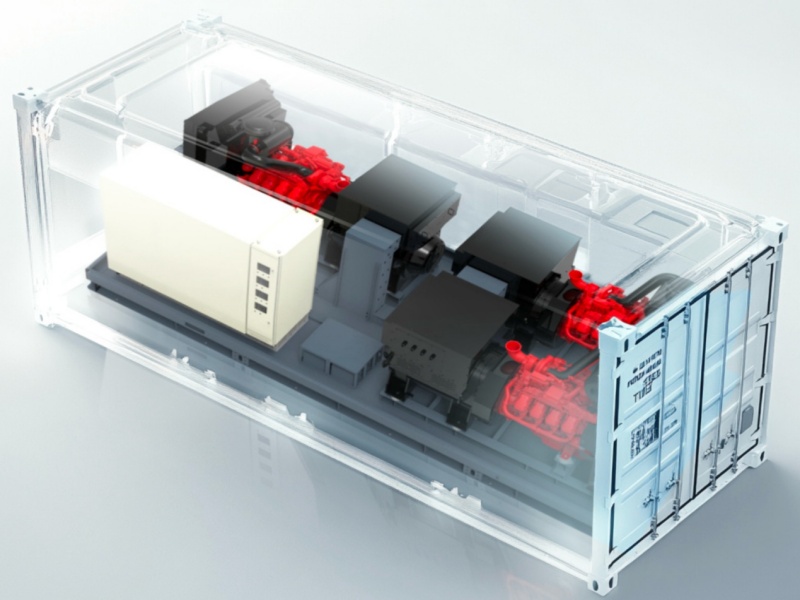
Commercial silent generators typically achieve a 25,000-hour service life when operators adhere to strict environmental control and lubricant chemistry protocols. By replacing standard mineral oils with Group IV synthetic lubricants and maintaining enclosure internal temperatures below 45°C, users reduce frictional wear by approximately 18% compared to baseline factory specifications. Integrating predictive vibration analysis and real-time fuel moisture monitoring allows facilities to maintain a 99.9% uptime reliability rate. Those looking for robust industrial solutions often evaluate cummins diesel generators for sale to ensure they meet stringent international standards for long-term power generation.
Frequent thermal cycling remains the most significant variable in engine component fatigue, particularly within sound-attenuated enclosures that restrict natural cooling. When ambient temperatures inside a canopy exceed 50°C, the chemical stability of standard engine oil degrades by 30% over 500 operating hours, leading to premature bearing surface scarring.
Maintaining consistent airflow through louvered vents requires semi-annual inspections of debris screens, as a 15% reduction in intake surface area directly correlates to a 5°C rise in coolant return temperatures during full-load operations.
High-output alternators rely on Class H insulation systems designed to withstand peak internal temperatures of 180°C, yet even minor moisture ingress from condensation during off-cycle periods causes dielectric breakdown. Engineers suggest maintaining a space heater current of 2-5 amps while the generator sits idle to prevent localized humidity saturation within the stator windings.
| Maintenance Task | Frequency (Operational Hours) | Expected Impact on Longevity |
| Coolant Additive Analysis | 250 Hours | Prevents 95% of cylinder liner pitting |
| Fuel Injection Timing Check | 1,000 Hours | Optimizes combustion efficiency by 4% |
| Air Filter Element Inspection | 100 Hours | Reduces particulate intake by 98% |
Fuel system integrity depends on keeping cetane levels stable and moisture content below 500 ppm, as high-pressure common rail systems tolerate very little contamination. Diesel fuel stability typically drops by 20% if stored longer than six months without the addition of biocides, which prevents the formation of sludge that clogs primary filters and stresses fuel pumps.
Microbial contamination in standby tanks accounts for approximately 45% of unexpected engine stalls, necessitating the use of mechanical centrifugal fuel polishing systems every 12 months to maintain ISO 4406 cleanliness standards.
Alternator maintenance involves monitoring the insulation resistance between windings and the frame, which should ideally exceed 100 megohms when measured at 500V DC. If resistance drops below 1 megohm, the potential for a catastrophic short circuit increases, often requiring expensive stator rewinding or complete unit replacement.
Vibration analysis serves as a primary diagnostic tool, where spectral signatures from engine blocks reveal early bearing failure or shaft misalignment long before a human operator notices abnormal noise. Implementing a baseline vibration signature during commissioning in 2024 allows technicians to identify deviations of more than 5% during quarterly inspections, which helps prevent damage to sensitive engine electronic control modules.
The electrical interface between the generator and the automatic transfer switch (ATS) must be inspected for thermal oxidation at connection points, which can cause voltage drops of up to 2V under heavy load conditions. Ensuring that all terminal lugs are torqued to manufacturer specifications, typically around 40-50 Nm, prevents high-resistance hotspots that can melt cable insulation or trigger false protective relay trips.
Exhaust gas temperature (EGT) monitoring provides direct feedback on combustion quality, where a 10% deviation from the documented baseline during full-load testing usually indicates faulty injectors or compromised turbocharger efficiency. When EGTs exceed nominal ranges for more than 10 minutes, the exhaust manifold gaskets and turbo seals undergo accelerated thermal expansion, eventually leading to leaks that compromise the acoustic rating of the enclosure.
Battery performance is frequently overlooked, yet lead-acid batteries in standby applications exhibit a 25% reduction in capacity every two years if they remain at sub-optimal charge levels. Utilizing three-stage intelligent battery chargers ensures that the electrolyte stays at the correct specific gravity, providing the necessary cranking amps to start the engine within the standard 10-second response window required by most safety regulations.
Stay with us on Rue de l'Université.
Best available rate, confirmed in under one minute — no OTA fees, no comparisons required.